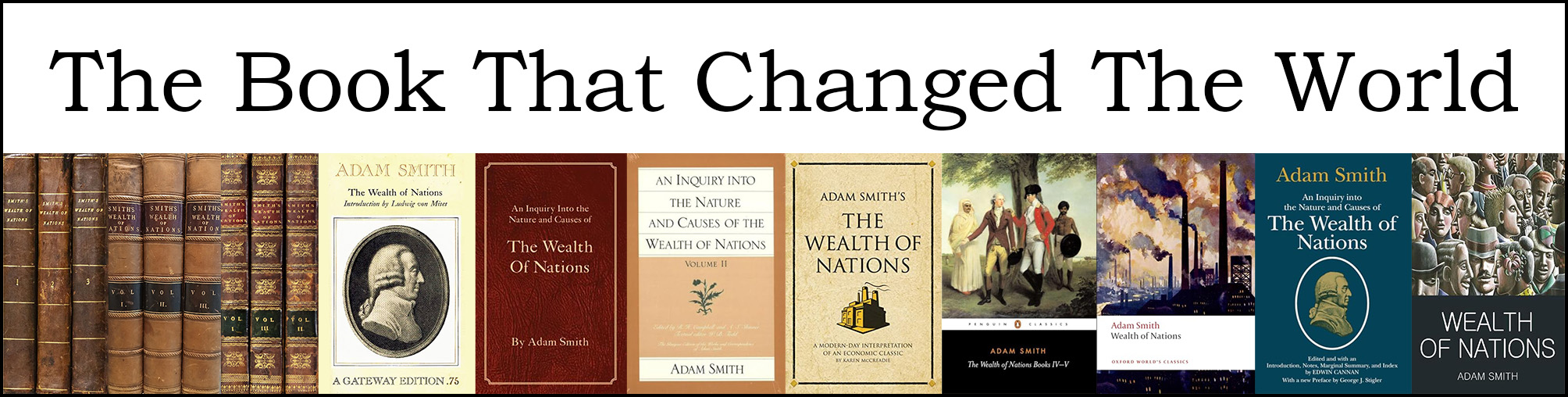
When Adam Smith wrote his famous discussion of the division of labour, he used the example of a small pin factory to show how productivity rises when work is broken into specialised tasks. In Smith’s time this was a revolutionary observation about how wealth is created. Today, that same principle operates on a planetary scale.
Modern globalisation can almost be seen as Smith’s pin factory expanded across the entire world. Different countries specialise in different stages of production depending on their skills, costs, infrastructure, and technology.
One of the most striking examples of this is the global supply chain that produces the iPhone made by Apple Inc.. The device is designed in the United States, relies on advanced semiconductors from countries such as Taiwan and South Korea, contains components produced in many different nations, and is assembled in large-scale factories in China. The result is a highly sophisticated product that would be extremely difficult, or prohibitively expensive, for any single country to produce entirely on its own.
This is precisely the kind of outcome Smith predicted when he argued that specialisation and trade increase overall wealth. By allowing different regions to focus on what they do best and then exchange the results through trade, productivity rises dramatically. In that sense, modern globalisation is not a departure from Smith’s thinking but rather its logical extension.
The economic transformation of China over the past four decades illustrates this process clearly. By specialising in large-scale manufacturing and integrating into global supply chains, China became the world’s largest exporter of manufactured goods and a central hub of global production. Millions of workers moved from rural agriculture into industrial employment, productivity rose sharply, and the country accumulated enormous economic influence. Smith argued that the wealth of a nation ultimately depends on the productivity of its labour, and China’s industrial expansion is one of the most dramatic examples of that principle in modern history.
For consumers around the world, the benefits appear in everyday objects like the iPhone. A device containing extraordinary computing power, precision manufacturing, and advanced materials can be sold at a price millions of people can afford because production is spread across a global network of specialised industries. In effect, the modern smartphone is a tangible example of the economic system Smith described: countless workers performing specialised tasks, coordinated through markets and trade, producing goods that raise living standards far beyond what earlier societies could imagine.
Seen this way, The Wealth of Nations is not just a historical text about eighteenth-century Britain. It is a lens through which we can understand the structure of the modern global economy, from the factories of China to the technology companies of Silicon Valley, and the intricate international cooperation that makes everyday products possible.
 The Wealth Of Nations